Adobe Real-Time Customer Data Platform: audiences your channels can act on
Adobe Real-Time Customer Data Platform: audiences your channels can act on
Softwhale implements Adobe Real-Time Customer Data Platform so that the profile your analysts describe and the audience your channels receive are finally the same thing.
Enhance audience activation with Adobe Real-Time CDP
Built on Adobe Experience Platform, Adobe Real-Time Customer Data Platform (Real-Time CDP) brings known and anonymous data from many enterprise sources into profiles that personalize experiences across all channels and devices in real time, with tools for data governance, identity management, advanced segmentation and data science.
It is not a standalone box you fill with exports: it inherits the platform’s schemas, identity graph and governance rules, so activation quality is decided upstream — in how identities are namespaced, how merge policies resolve conflicts, which fields carry usage labels. Softwhale takes that chain end to end, down to the moment a policy correctly refuses an export.
Why Adobe Real-Time Customer Data Platform?
Marketing teams rarely lack channels. They lack a shared definition of who they are talking to. The web SDK sees a cookie, the CRM sees an account, the paid media platform sees a hashed email, and each one builds its own idea of the same person. Audience lists get rebuilt per channel, suppression rules drift apart, and nobody can say with confidence whether an anonymous visitor and a known customer are one individual. Real-Time CDP is the layer where that question gets a single answer, and where the answer is allowed to change in real time.
Why Choose Softwhale?
Why Choose Softwhale?
Real-Time CDP projects fail on the data layer far more often than on the marketing layer. That is the layer we are strongest in, and we do not hand it over half-configured.

What our clients says about us














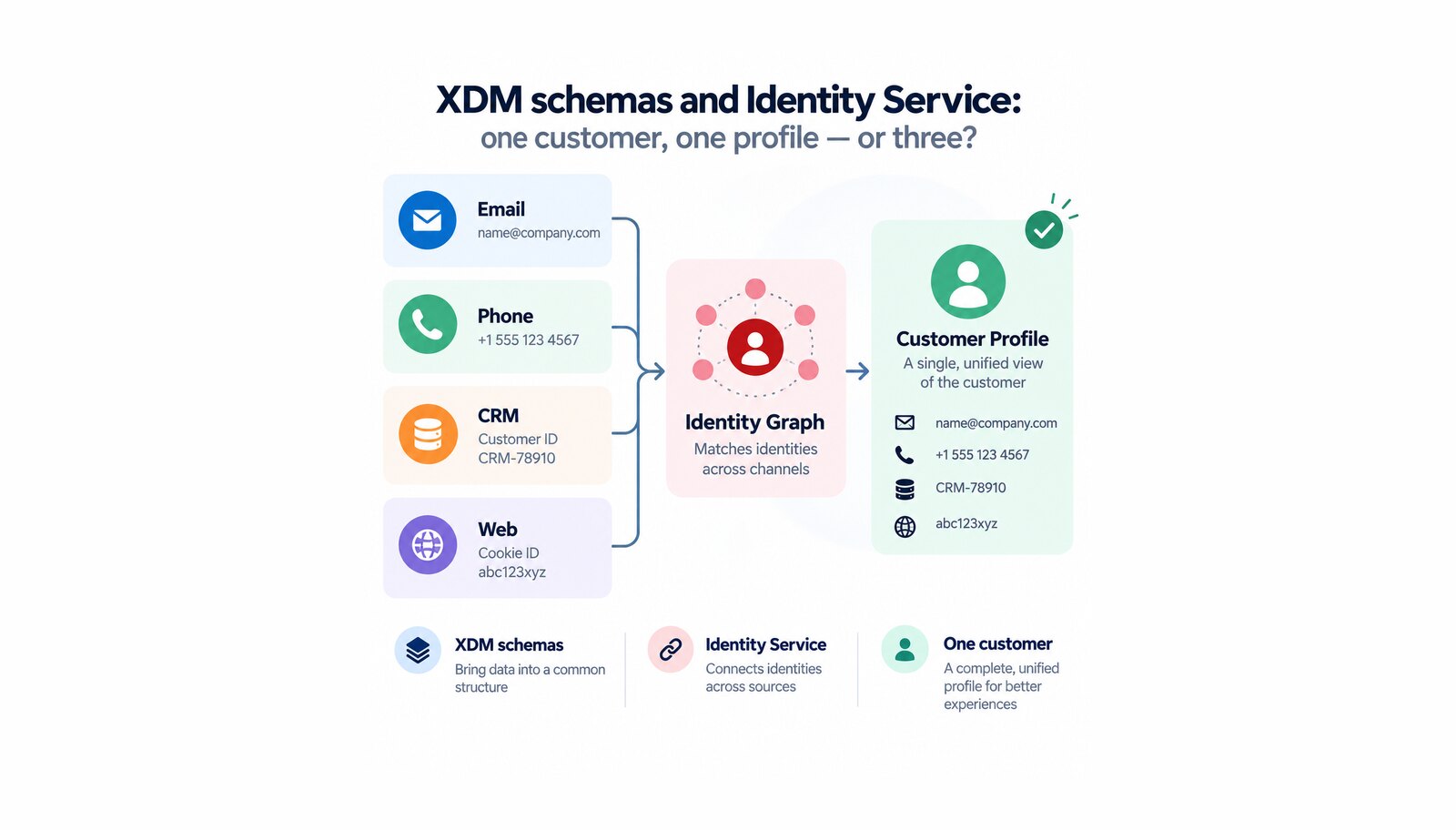
How Adobe Experience Platform decides that three records are one person — what XDM schemas and Identity Service do, and which decisions harden first.

Why one collection layer beats a tag per vendor: what the Adobe Experience Platform Web SDK changes, and what datastreams and tag properties each do.
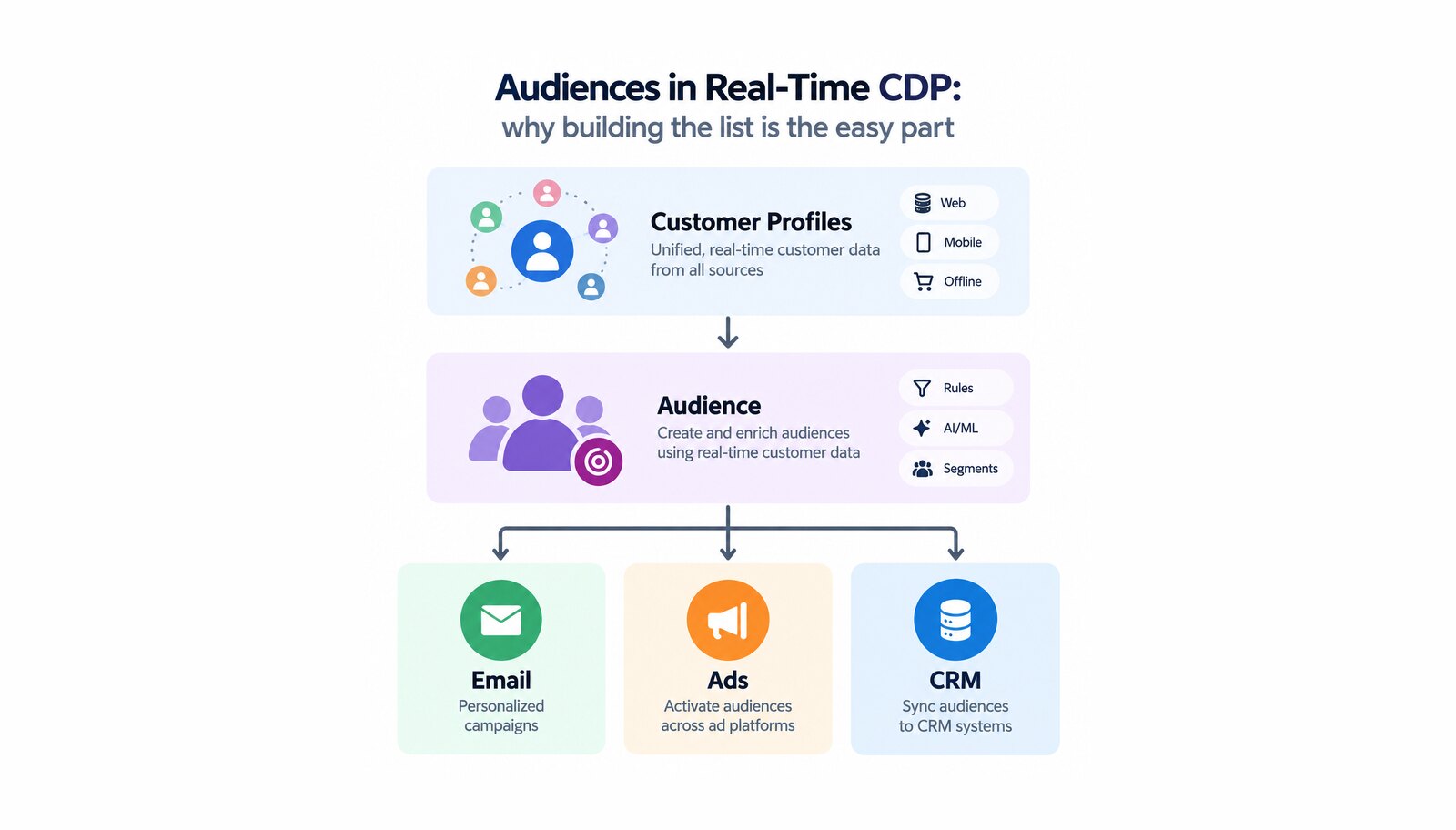
How audiences work in Adobe Real-Time Customer Data Platform: evaluation methods, what a destination may be used for, and the limits to plan around.