Adobe AI services for business: putting the AI you own to work
Adobe AI services for business: putting the AI you own to work
Softwhale enables, governs and integrates the artificial intelligence built into your Adobe Experience Cloud stack, so that assistants, agents, generative features and predictive models are used on purpose rather than discovered by accident.
Enhance your Experience Cloud stack with AI services
AI in Adobe Experience Cloud is rarely something you buy on its own. It arrives inside the products you already run — content authoring, the journey canvas, the analytics workspace, the profile store — and each has its own permissions model, entitlement conditions and data prerequisites. Nobody owns it end to end.
This page is about our work, not about a product. We treat AI across your Adobe estate as one program: what you are already entitled to, which use cases are worth the effort, the data they need, access, and governance rules. What each application’s AI does is documented on that application’s page.
Why AI services rather than an AI project?
The failure mode we are called in to fix is consistent. Somebody enables an assistant, a few people try it, the outputs are plausible but unverified, and the initiative quietly stops — while elsewhere a genuinely valuable capability sits unused because it needed a data model nobody prepared or a permission nobody granted. AI in an enterprise content and marketing stack is not a feature toggle: it is a set of capabilities with prerequisites, license conditions and accountability attached. Treating it as a service — assessed, configured, governed and supported — is the difference between a demonstration and something your teams rely on next quarter.
Key Benefits of Adobe AI services
Entitlement & Governance
- 1Entitlement and capability assessment. What your current contracts already include, what each candidate capability additionally requires, and what it would cost to add. Several Adobe AI capabilities are gated — by a separate agreement, by a companion product entitlement, or by a consumption allowance — and we establish that before a use case is promised to anyone.
- 2Use case selection. A shortlist scored on value and on readiness, with an explicit list of what we recommend not doing yet. The second list is usually the more useful one.
- 3Governance design. Who may use which capability, what is reviewed before publication, and how that is recorded. Adobe says AI responses should be double-checked, ties use to its Adobe CX Enterprise Generative AI User Guidelines, and applies Content Credentials to exported Firefly assets — we turn that into a workflow.
Our Services: Adobe AI services Specialization
Why Choose Softwhale for Adobe AI Services?
We come to AI from the implementation side of Adobe Experience Cloud, not from the demo side. That shapes what we do first.
Benefits of moving Adobe AI into everyday operations
The first change is that AI stops being a pilot. Capability is enabled deliberately, for named use cases, with the data behind it prepared and the people who use it trained — so the output is something a team can build a process on. The second change is that governance exists before the incident rather than after it: review responsibilities are assigned, terms are accepted knowingly, and there is a record of what was generated with what.
The third change is commercial. Most organizations are already paying for more AI capability than they use, and are simultaneously at risk of promising a capability that turns out to sit behind another agreement. Knowing exactly which side of that line each feature falls on makes budgeting a decision instead of a discovery.

What our clients says about us














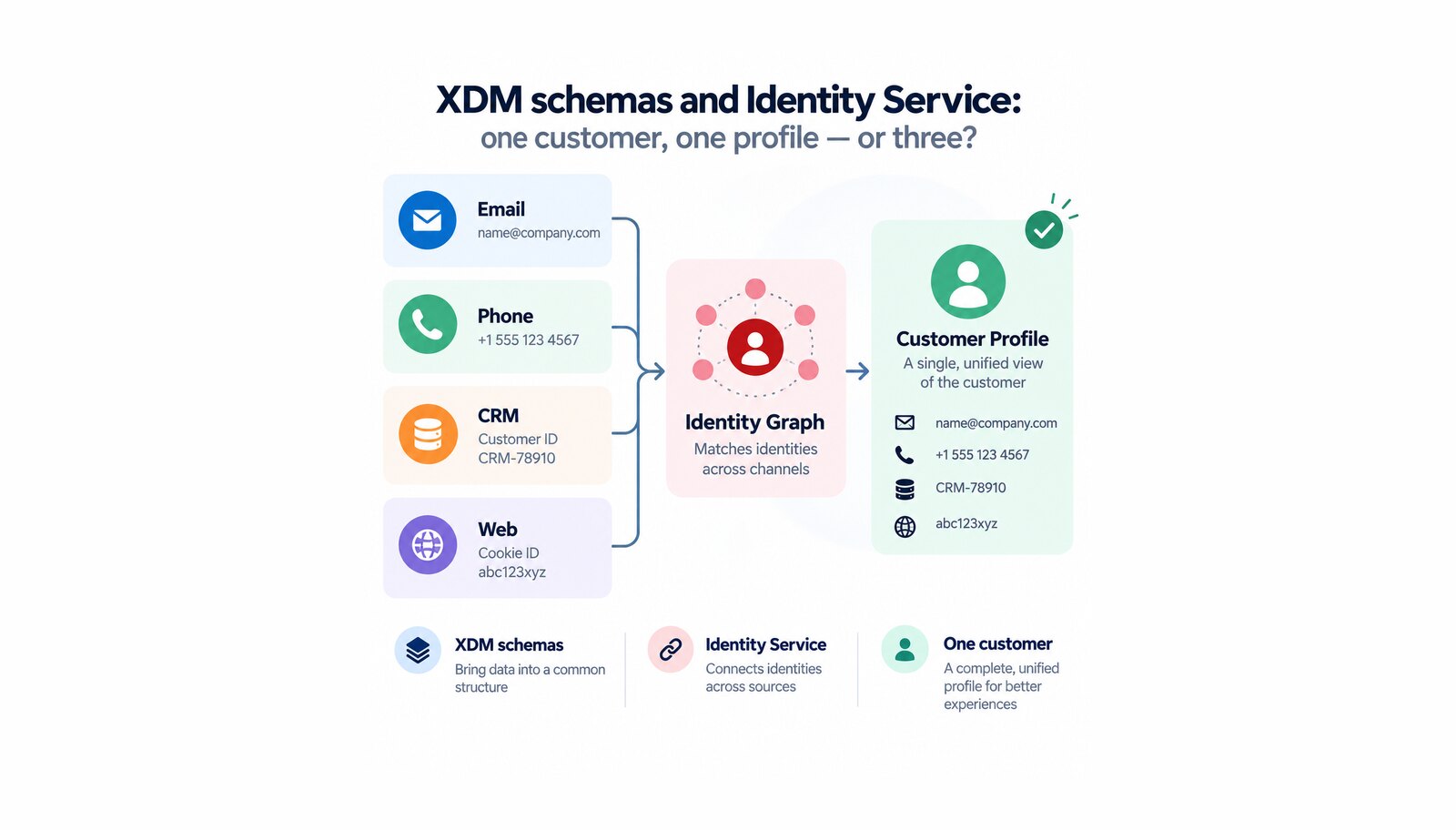
How Adobe Experience Platform decides that three records are one person — what XDM schemas and Identity Service do, and which decisions harden first.

Why one collection layer beats a tag per vendor: what the Adobe Experience Platform Web SDK changes, and what datastreams and tag properties each do.
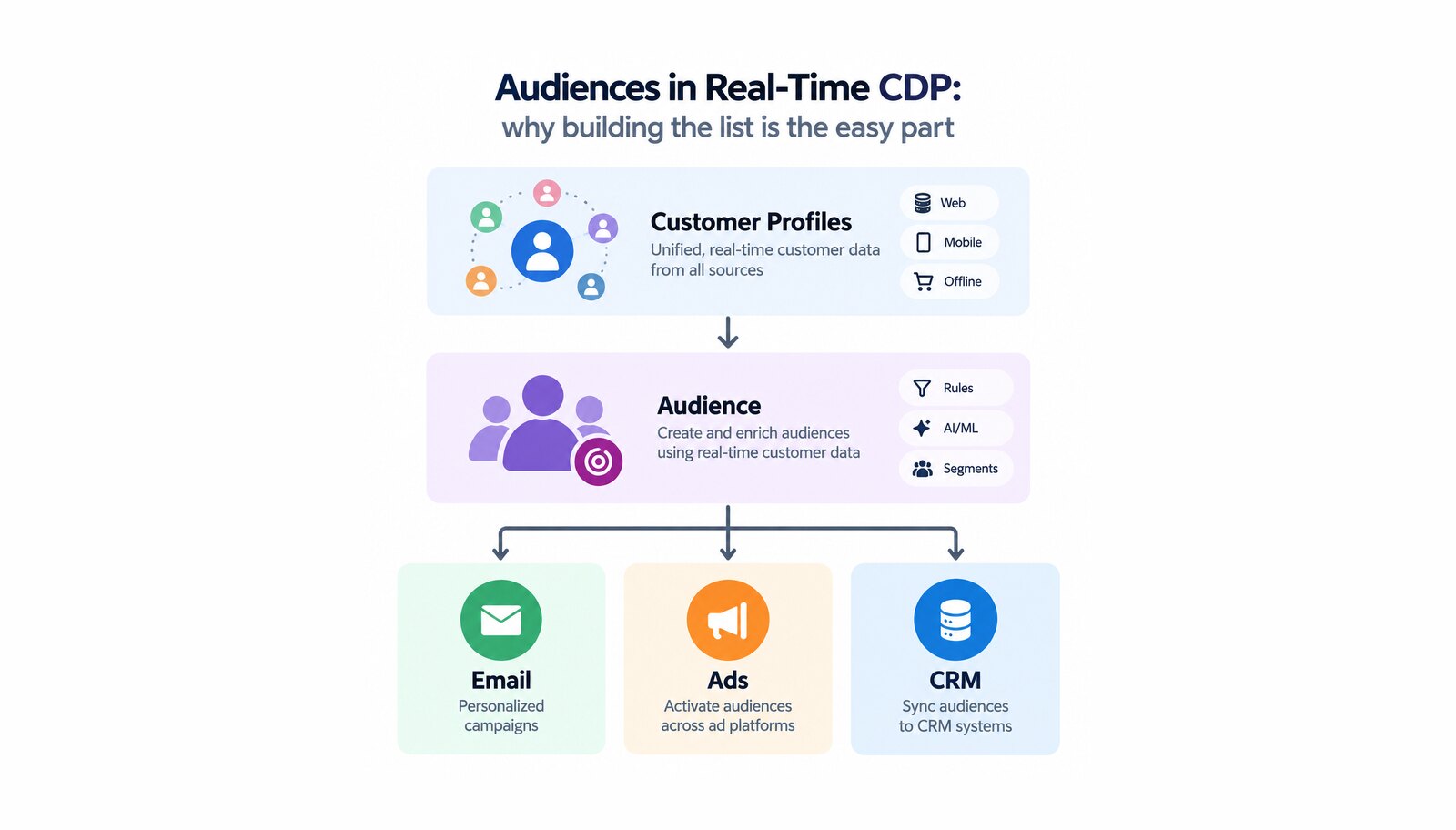
How audiences work in Adobe Real-Time Customer Data Platform: evaluation methods, what a destination may be used for, and the limits to plan around.