Customer & Attribution AI: predictions you can act on
Customer & Attribution AI: predictions you can act on
Softwhale builds the two predictive services of Adobe Experience Platform — Customer AI for individual-level propensity, Attribution AI for multi-channel credit — on data that is actually shaped to train them.
Enhance marketing with Customer and Attribution AI
Customer AI and Attribution AI are part of Intelligent Services on Adobe Experience Platform. Marketing analysts set them up with business-level configurations, without data science expertise, then activate the predictions in Adobe Experience Cloud and in third-party applications.
The convenience is charged back in data preparation. Both services read event data through Experience Data Model, and the questions that decide whether a model is worth trusting come first: which datasets carry the outcome, which identity joins them, whether the history is long enough. Softwhale answers those, then configures the services against them.
Why Customer and Attribution AI?
Most marketing organizations have two open questions that reporting cannot close: which customers are about to churn or convert, and why; and which of the touchpoints before a conversion actually moved it rather than merely came last. Rule-based answers to both are cheap and quietly wrong — these services replace them with models trained on your own history.
Our Managed Services for Customer and Attribution AI
We deliver these services as a data product with a marketing owner: history shaped for training, configurations that match a real decision, and scores that land where segmentation and reporting can pick them up.
Scope & Readiness
Predictive AI Advantages
Customer AI: propensity scores with the reason attached
Customer AI produces individual-level propensity scores — churn and conversion are the two types you configure. Each eligible profile gets a score from 0 to 100, a probability Adobe recommends for comparing goals, and influential factors rated low, medium or high — a brief you can segment on.
Attribution AI: credit spread across the whole journey
Attribution AI assigns credit to the touchpoints leading to a conversion, from Adobe or non-Adobe sources. It produces algorithmic scores — incremental and influenced — and rule-based ones: First touch, Last touch, Linear, U-shaped and Time-Decay. Stakeholders recognize the second set; the first changes budgets.
What these two services are not
The fastest way to waste a predictive project is to expect the wrong thing from it, so we set the boundary early. Adobe is explicit that Customer AI is not a recommendations tool — that is what Adobe Target is for. It cannot report journey stage or drive dynamic pricing, and a high score is not a discount.
Schemas & Connectors
Data work first: Intelligent Services need Consumer ExperienceEvent datasets with a history holding both positive and negative journeys. We configure goal, population and events for Customer AI; identity, channel and windows for Attribution AI. Scores reach Real-Time CDP through Real-Time Customer Profile.
Model Quality
Models decay quietly. We review run history and scoring frequency, watch model quality — Adobe treats an area under the ROC curve below 0.65 as unacceptable and tells you to retrain rather than ship it — and check that the score still matches the business question.
Softwhale — Your Trusted Partner in Customer and Attribution AI
The working change for marketers is that a prediction becomes an attribute rather than a project. A propensity score and its influential factors sit on the profile, so a segment can be built on likelihood to churn and on the reason behind it, in the same interface as every other audience, and activated through the same destinations. The working change for analysts is that attribution stops being a single rule applied to everything: algorithmic and rule-based scores arrive side by side on the same conversions, broken down by channel, campaign and other dimensions the output carries.
For the business, that means budget conversations supported by incremental impact rather than by last-touch convention, and retention effort aimed at named individuals with a stated reason.
Why Choose Softwhale for Customer and Attribution AI?
Why Choose Softwhale for Customer and Attribution AI?
These services are easy to switch on and easy to mislead. The value is in the data preparation, and in the discipline of saying out loud what a model cannot do.

What our clients says about us














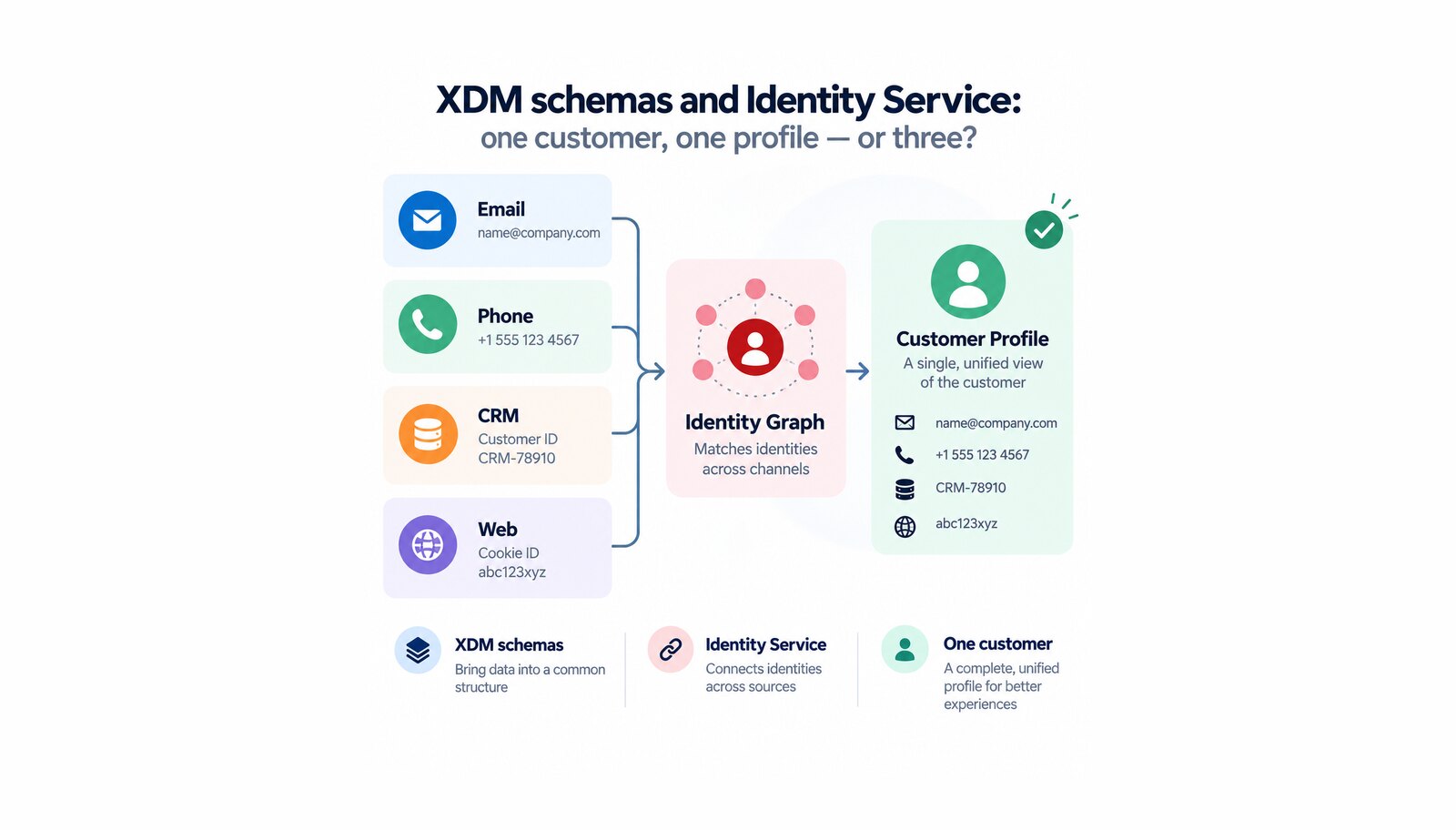
How Adobe Experience Platform decides that three records are one person — what XDM schemas and Identity Service do, and which decisions harden first.

Why one collection layer beats a tag per vendor: what the Adobe Experience Platform Web SDK changes, and what datastreams and tag properties each do.
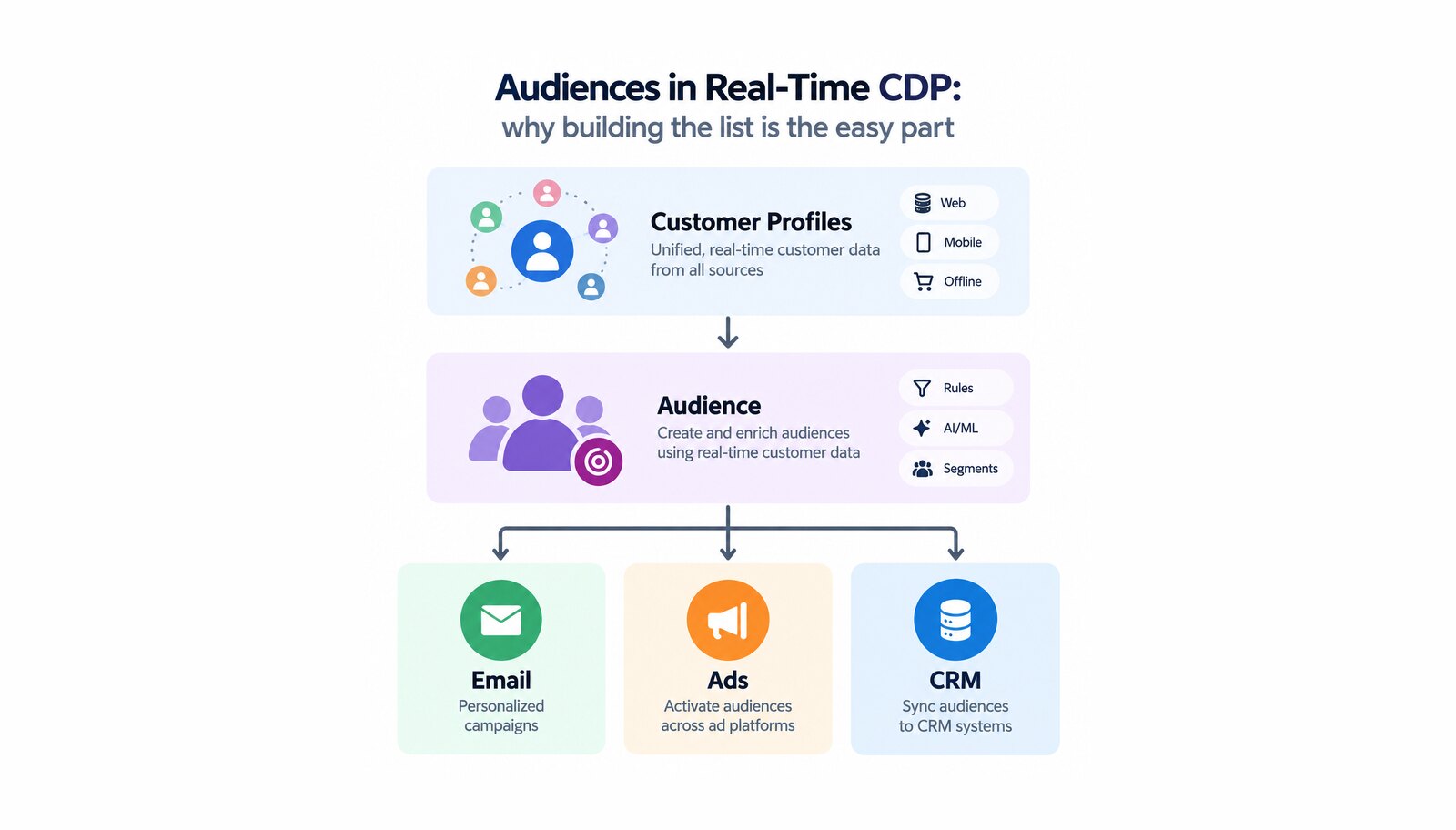
How audiences work in Adobe Real-Time Customer Data Platform: evaluation methods, what a destination may be used for, and the limits to plan around.