Edge Delivery Services for business: fast to publish, fast to load
Edge Delivery Services for business: fast to publish, fast to load
Softwhale implements Edge Delivery Services on Adobe Experience Manager so your authors publish in seconds, your developers ship from GitHub, and your pages stop losing traffic to load time.
Enhance web delivery with Edge Delivery Services
Adobe describes Edge Delivery Services as a content delivery framework that re-imagines how websites are built and delivered, optimizing for speed, simplicity and scalability. It is a core part of Adobe Experience Manager, pushes rendering to the edge of the network, and integrates with your CDN rather than replacing it.
Architecturally it is a bigger change than a performance project: AEM Publish, Dispatcher and Core Components give way to a multi-cloud SaaS solution and pure front-end development, with code deployed from a GitHub repository and content live without a rebuild. Softwhale plans and delivers that transition.
Why Edge Delivery Services?
Two costs quietly dominate most content operations. The first is publishing latency: an author’s change waits on a review queue, then on a build, then on a cache. The second is page weight, which shows up as lost organic traffic and lower conversion long before anyone opens a performance report. Traditional AEM delivery addressed both with process and tuning. Edge Delivery Services addresses them structurally — by making publishing near-instant, by moving delivery to the edge, and by letting authors work in the tools they already use rather than the tools the CMS prefers.
Key Benefits of Edge Delivery Services
Authoring & Delivery
- 1Authoring model selection. Universal Editor, document-based authoring, or both on the same site — decided per content area and per team, because the two carry very different governance and training implications.
- 2Migration scoping. Which sites or page groups move first, what stays on AEM Sites as a Cloud Service, and how the two coexist on one domain while the program runs.
- 3Delivery and CDN design. How Edge Delivery Services sits alongside your own CDN or the included Adobe-managed CDN, and what that means for caching, domains and certificates.
Our Services: Edge Delivery Services Specialization
Why Choose Softwhale for Edge Delivery Services?
We have delivered Adobe Experience Manager for years, and Edge Delivery Services is where AEM is going. We work on both sides of that line.
Benefits of moving to Edge Delivery Services
For authors the change is immediate: a preview URL for stakeholder review that is deliberately non-production and invisible to search engines, then a publish that puts content on the live site within seconds. For developers the change is the absence of ceremony — GitHub, local development with auto-reload, and none of the transpilation, bundling and configuration overhead that made a small change expensive. Adobe frames the timeline shift as going live in days and weeks instead of months and years. For the business, both changes point at the same outcome: more content shipped per sprint on pages that load fast enough to keep the traffic they earn.
The architecture also decouples cleanly. Edge Delivery is a performance-first head that is decoupled from the backend, so a future front-end change does not become a CMS migration. A first set of templates and a live section typically take 6–8 weeks, with releases every two weeks; the performance gain lands on the pages moved first, which is where Core Web Vitals go green before anywhere else.

What our clients says about us














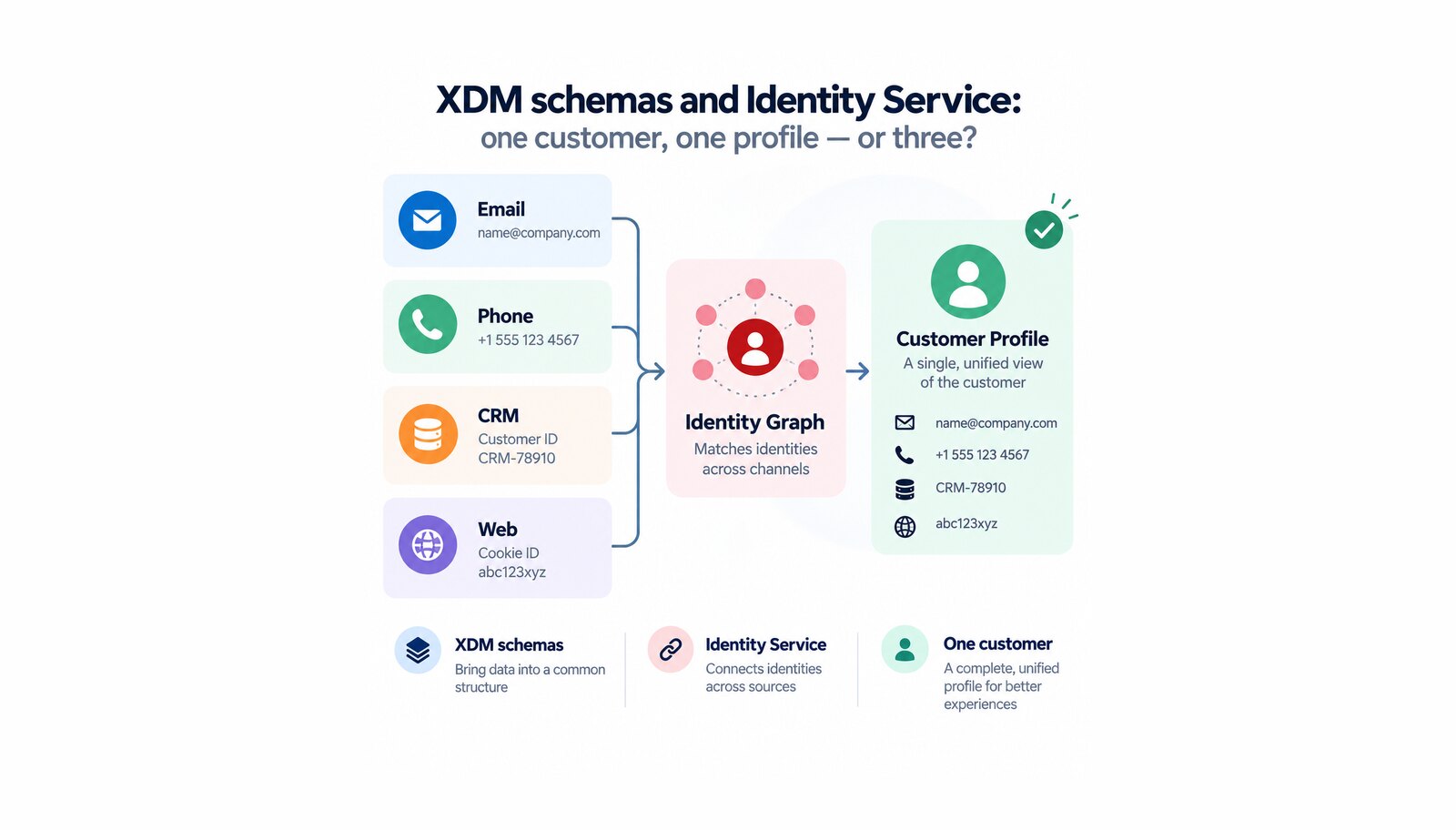
How Adobe Experience Platform decides that three records are one person — what XDM schemas and Identity Service do, and which decisions harden first.

Why one collection layer beats a tag per vendor: what the Adobe Experience Platform Web SDK changes, and what datastreams and tag properties each do.
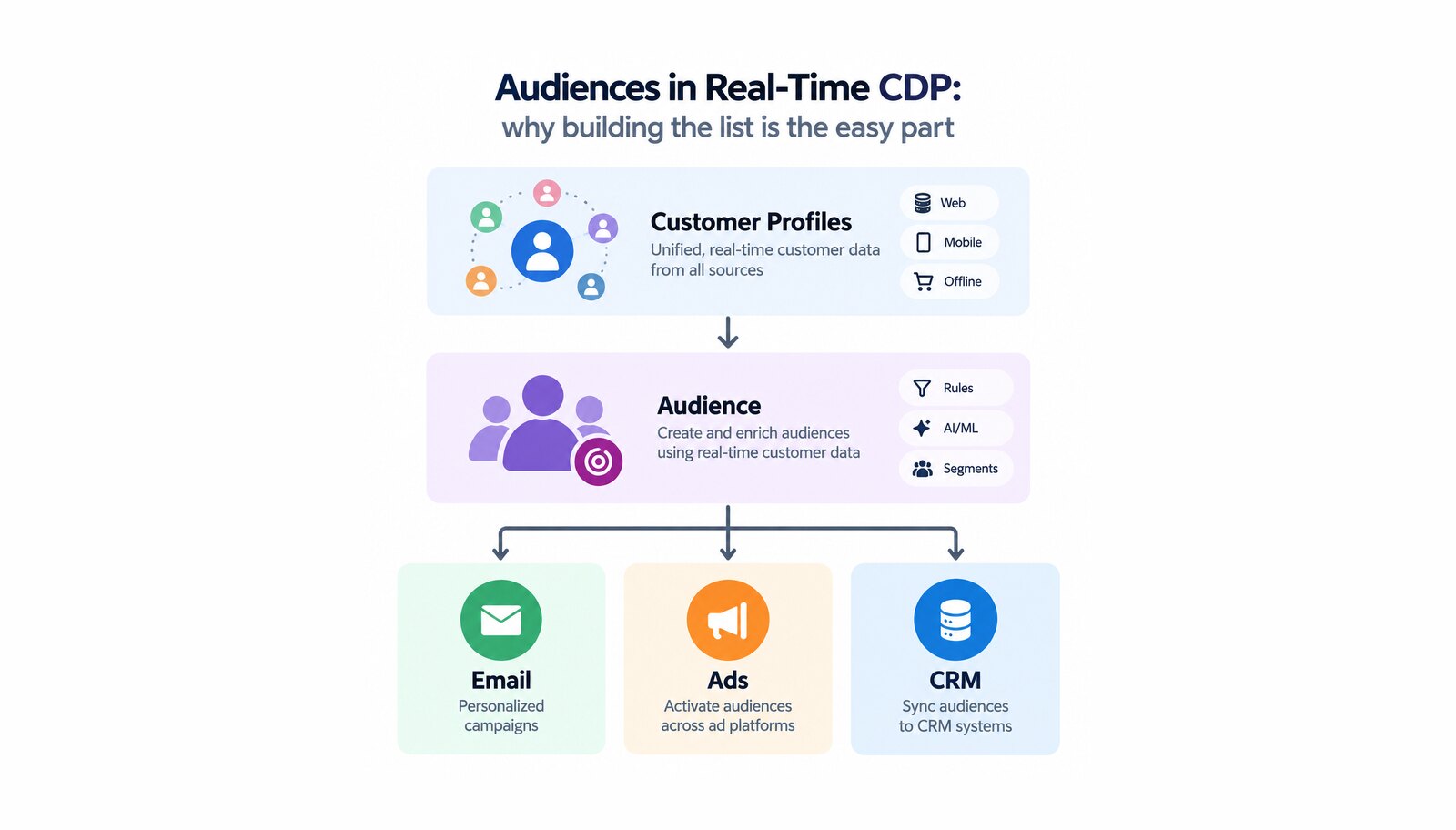
How audiences work in Adobe Real-Time Customer Data Platform: evaluation methods, what a destination may be used for, and the limits to plan around.