AEM as a Cloud Service: a platform that stays current without an upgrade project
AEM as a Cloud Service: a platform that stays current without an upgrade project
Softwhale runs Adobe Experience Manager as a Cloud Service — AEM as a Cloud Service from here on — as a working platform: environments, pipelines, and the release discipline that keeps automatic updates uneventful.
Enhance content operations with AEM as a Cloud Service
Adobe positions the platform around four properties: always on, always at scale, always current and always evolving. What changes how a team works is always current — Adobe runs a continuous delivery pipeline for the AEM codebase itself, with automated updates up to several times a month. That holds only if code stays compatible with a baseline image that can change, and every release travels through Cloud Manager.
Moving an existing implementation onto the platform is its own project, with its own Adobe tooling — Best Practices Analyzer, Content Transfer Tool, Cloud Acceleration Manager — and that work lives on our AEM Migration & Upgrade page.
Why AEM as a Cloud Service?
The expensive part of a content platform is rarely the platform — it is the queue in front of it: a release waits for an environment, the environment for a maintenance window. AEM as a Cloud Service removes that queue: Adobe updates the product, the service scales itself, Cloud Manager is the single road to production. The trade: the Web Console for OSGi bundles and configuration is not part of the service, and the developer console replacing it is read-only for most runtime information.
Benefits of moving to AEM as a Cloud Service
For the delivery team, a whole category of work disappears. An AEM version update is a separate deployment event from your own code release, and Adobe intends version updates to be backward compatible with the customer code already deployed, so "we cannot take the new version because of our customizations" stops being a standing agenda item. Front-end and web-tier configuration changes deploy on their own pipelines in minutes instead of riding a full-stack release, and scaling is the service’s responsibility, so a traffic peak is a capacity event rather than an incident.
For the business the effect is a shorter distance between a decision and a live page, on a platform that is current by default rather than by project. A move onto the platform, pipelines included, typically runs 12–16 weeks; afterwards releases go out every two weeks instead of waiting for a maintenance window, and the upgrade and infrastructure work that used to be a project of its own is what takes TCO down by around 30 %.
Why Choose Softwhale for AEM as a Cloud Service?
Why Choose Softwhale for AEM as a Cloud Service?
We have delivered Adobe Experience Manager for years, and the platform layer is where AEM projects quietly succeed or quietly stall.

What our clients says about us














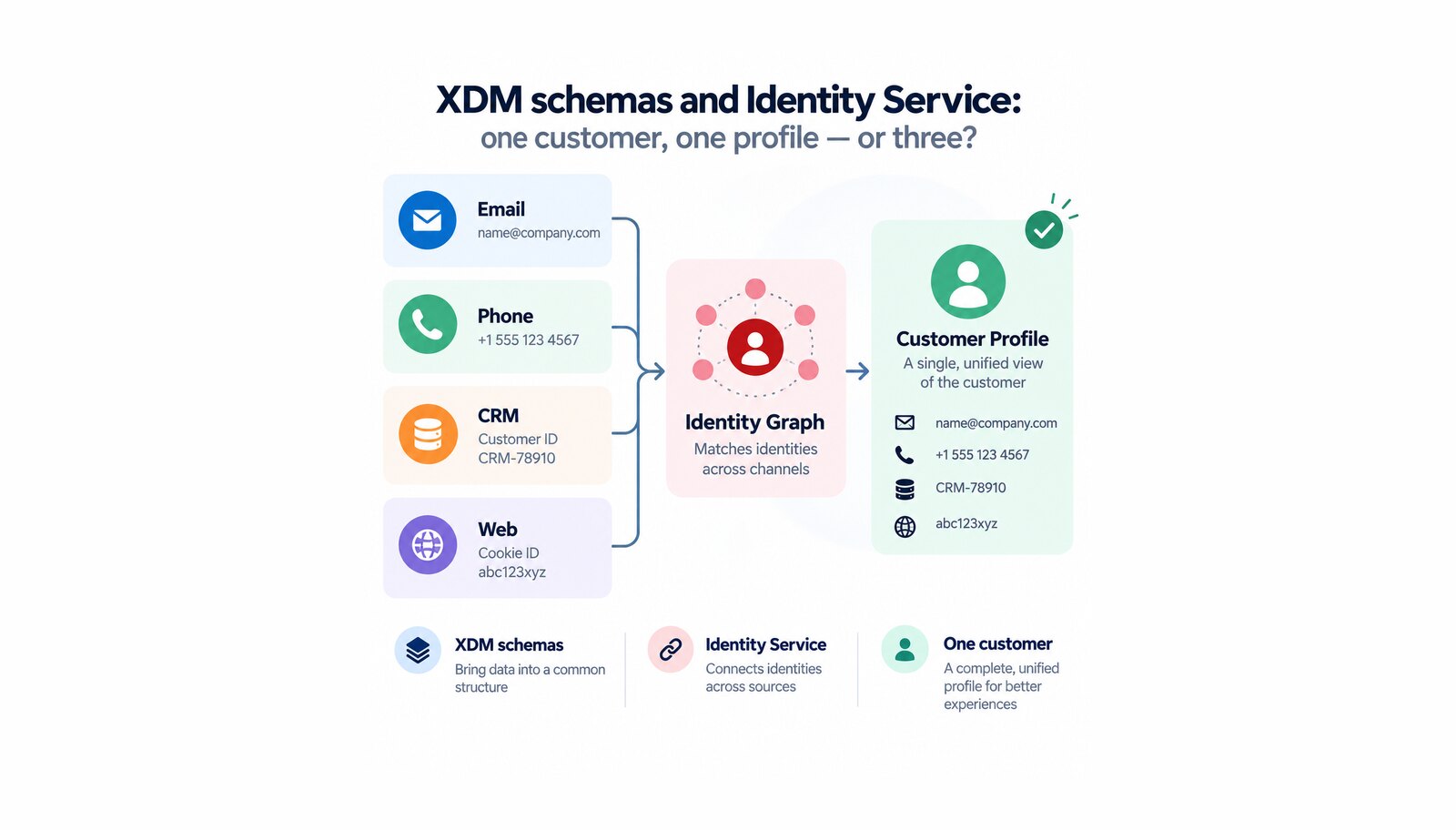
How Adobe Experience Platform decides that three records are one person — what XDM schemas and Identity Service do, and which decisions harden first.

Why one collection layer beats a tag per vendor: what the Adobe Experience Platform Web SDK changes, and what datastreams and tag properties each do.
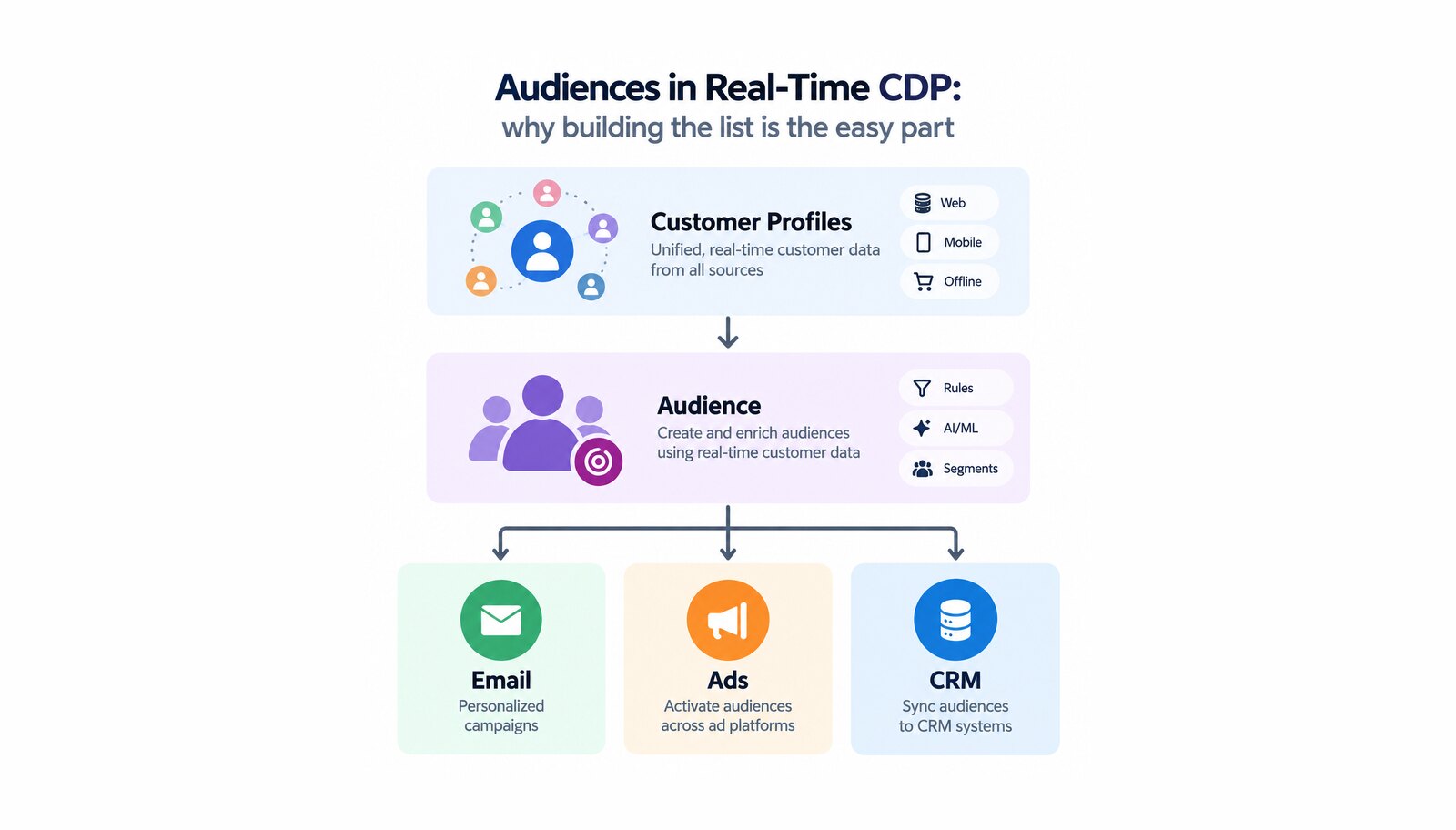
How audiences work in Adobe Real-Time Customer Data Platform: evaluation methods, what a destination may be used for, and the limits to plan around.